


The purpose of a fire detector and its role in the fire safety system.
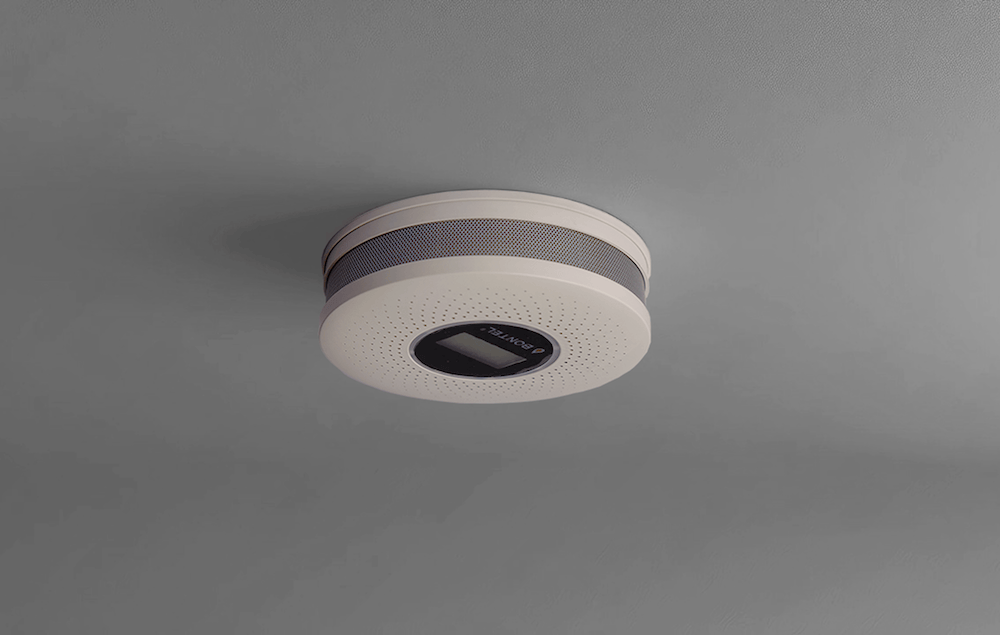
Fire Detectors (FDs) are one of the key components of a fire alarm system (FAS), responsible for signaling the outbreak of a fire. Detectors are installed in all fire-protected areas and identify signs of smoke, gas concentration, open flames, or temperature rise beyond a set threshold.
Manual models (Manual Call Points – MCPs) allow any individual to activate the fire alarm system by pressing an emergency button.
In this article, we will discuss the purpose of various types of fire and security alarm detectors and their operating principles.
Fire Detectors: Types, Features, and Operating Principles
All fire detectors are classified by design and general operating principles. The most common and widely used types are manual, point-type, and linear detectors. The first two are typically found in most public buildings such as schools, hospitals, and offices.
Linear detectors are more commonly installed in large warehouses and industrial facilities.
The simplest type of detector is the manual call point (MCP). These are typically housed in a red casing with a button that allows a person to send an alarm signal and activate the fire alarm system. Such detectors are mounted on walls and must be easily accessible. To ensure this, they are:
- They are mounted at a height of 1.4 to 1.6 meters, making the button accessible even to a child.
- They are placed no more than 45 meters apart. All distances are specified in Set of Rules (SP) 484.1311500.2020."
The second type of detectors is point-type detectors. These are compact devices powered either by a battery or a low-voltage electrical circuit, and are typically mounted on the ceiling—though in rare cases, they may be installed on walls. Point-type fire detectors are often recommended for use in residential apartments because they:
Point-type detectors operate 24/7 and continuously monitor for signs of fire. If any are detected, the sensor switches to alarm mode and sends a signal to the fire alarm control panel, or activates a built-in siren. The latter is typical for standalone battery-powered models.
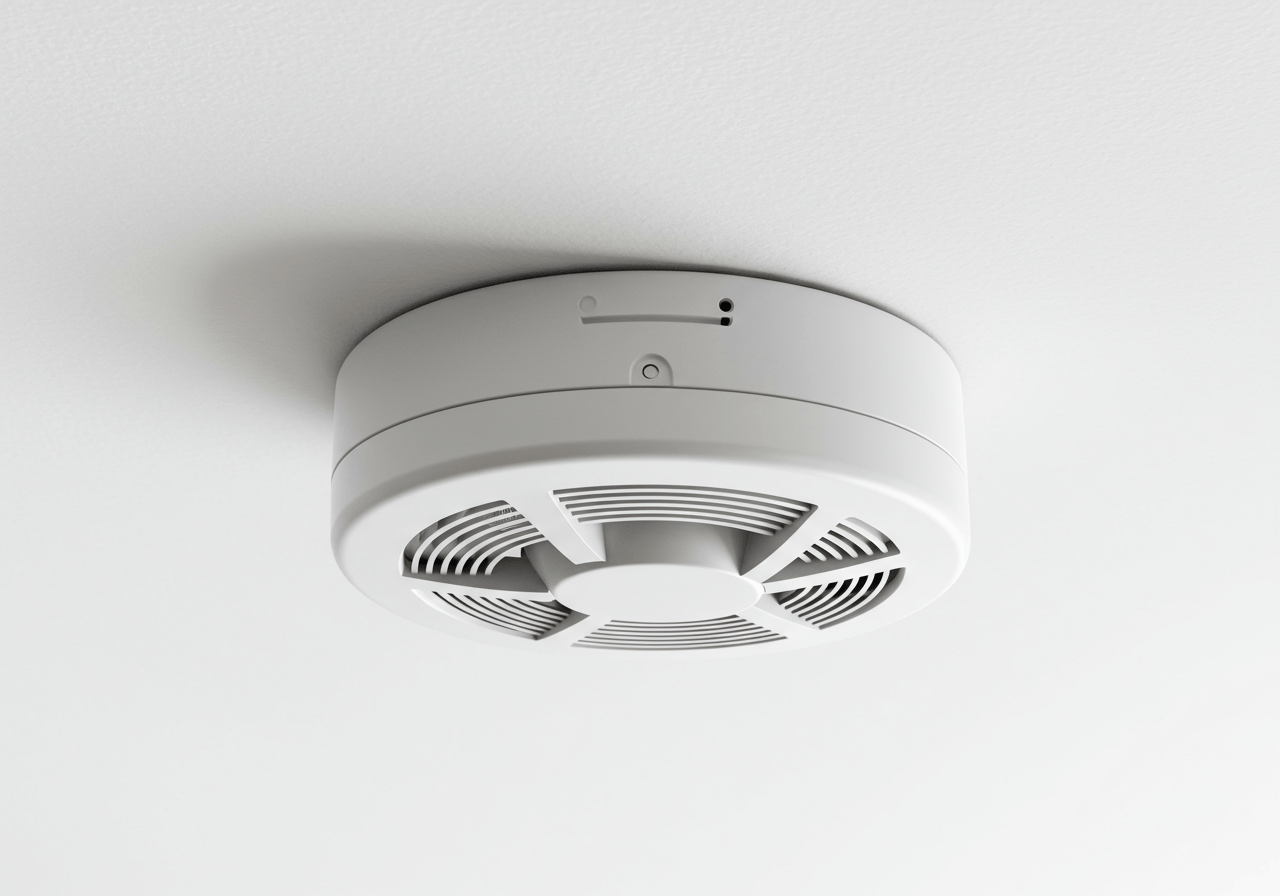
Point-Type Detectors operate 24/7, continuously monitoring for signs of fire. When such signs are detected, the detector switches to alarm mode and either sends a signal to the fire alarm control panel (FACP) or triggers a built-in siren. The latter is typical for standalone (battery-powered) models.
Features of point-type detectors:
- They have a circular detection area. They detect signs of fire at a certain distance from themselves. For example, in smoke models, it is a maximum of 6.4 meters. When positioning, point-type detectors must cover every point in the room with their detection areas.
- They can be classic or standalone. The former are powered from the mains and connected to the fire alarm system. The latter run on batteries and may have a GPS module for connection to the fire alarm system or may lack it, and include a built-in siren.
- Classic fire detectors can be addressable or non-addressable. Both types are used in fire alarm systems. Addressable detectors allow for pinpointing the exact location of the fire, while non-addressable ones only provide an approximate location, for example, within a certain zone of the building.
Unlike point-type detectors, linear detectors have a detection area in the form of a beam and the area surrounding it. This makes it possible to detect signs of fire in large rooms. The detector consists of two elements: an emitter and receivers or reflectors. The first forms an infrared beam, and the others receive it. Heres how it works:
- Under normal conditions, the infrared beam reaches the receivers or reflectors without delay and in full.
- In case of fire, smoke appears in the path of the beams. It scatters them, which is detected by the sensors. An alarm is triggered.
Features of linear detectors consisting of an emitter and receiver or reflector:
- They detect only smoke. The infrared beam does not react to temperature or flame.
- They have a long beam length. This allows protecting a room with a length and width of up to 100–150 meters without installing 4–5 point-type detectors instead.
Unlike linear detectors, point-type detectors respond to various signs of fire. Depending on the model, they operate based on a principle that allows detecting smoke, flame, heat flow, or gases such as methane, propane, or CO₂. The most common are smoke detectors. Their purpose is to detect "smoldering fires," such as those involving fabric, wood, or plastic. For this reason, such detectors are most often installed in apartments, offices, and public places: stores, shopping centers, libraries, cinemas, and others.
Working Principle of a Point-Type Smoke Detector:
-
Inside the device are a light emitter and a photodiode.
-
The photodiode is positioned at an angle to the emitter so that, under normal conditions, the light beam does not strike it.
-
When smoke enters the detection chamber, it scatters the light, causing some of it to reach the photodiode — which then triggers the alarm.
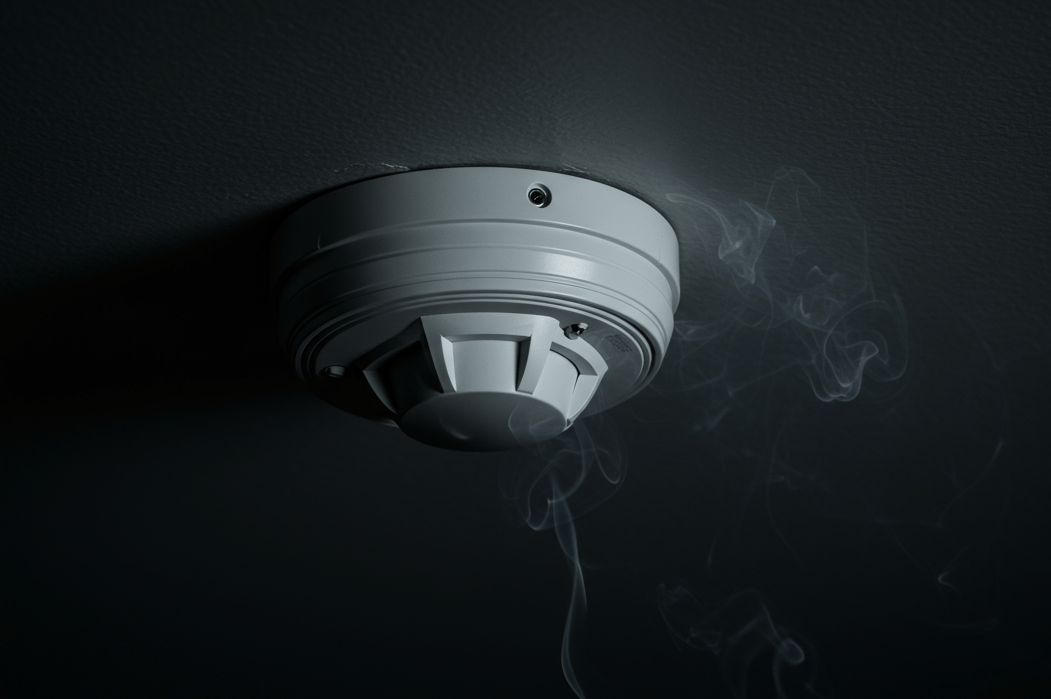
Point-type heat fire detectors are less common. Their purpose is to detect fires that release a large amount of heat and rapidly increase the temperature in the room. This is typical for fuel storage warehouses and industrial facilities. In such fires, a smoke detector would respond later.
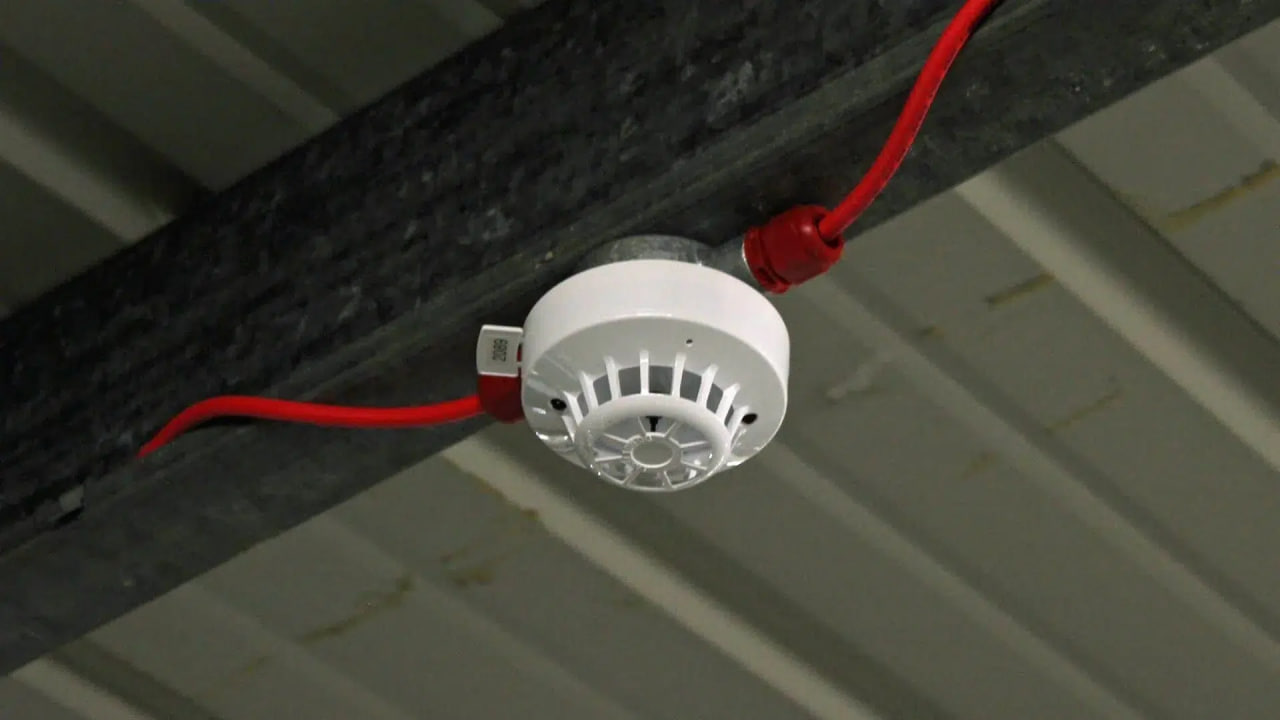
gulfstream.ru
Point-type fire detectors have three operating principles depending on the model:
-
Maximum. Activates if the temperature exceeds a certain threshold, for example, +65 or +75 degrees Celsius.
-
Differential. Responds to rapid temperature spikes. For instance, if the temperature increases by 20-30 degrees within 30 seconds.
-
Maximum-differential. The most commonly used combined-action models.
Flame detectors are less widespread. They are used at explosion- and fire-hazardous sites where fires can develop rapidly, such as facilities dealing with flammable liquids and gases. In such fires, smoke and temperature may rise disproportionately to the amount of open flame, causing other detectors to trigger too late. The detector uses UV or IR beam emitters:
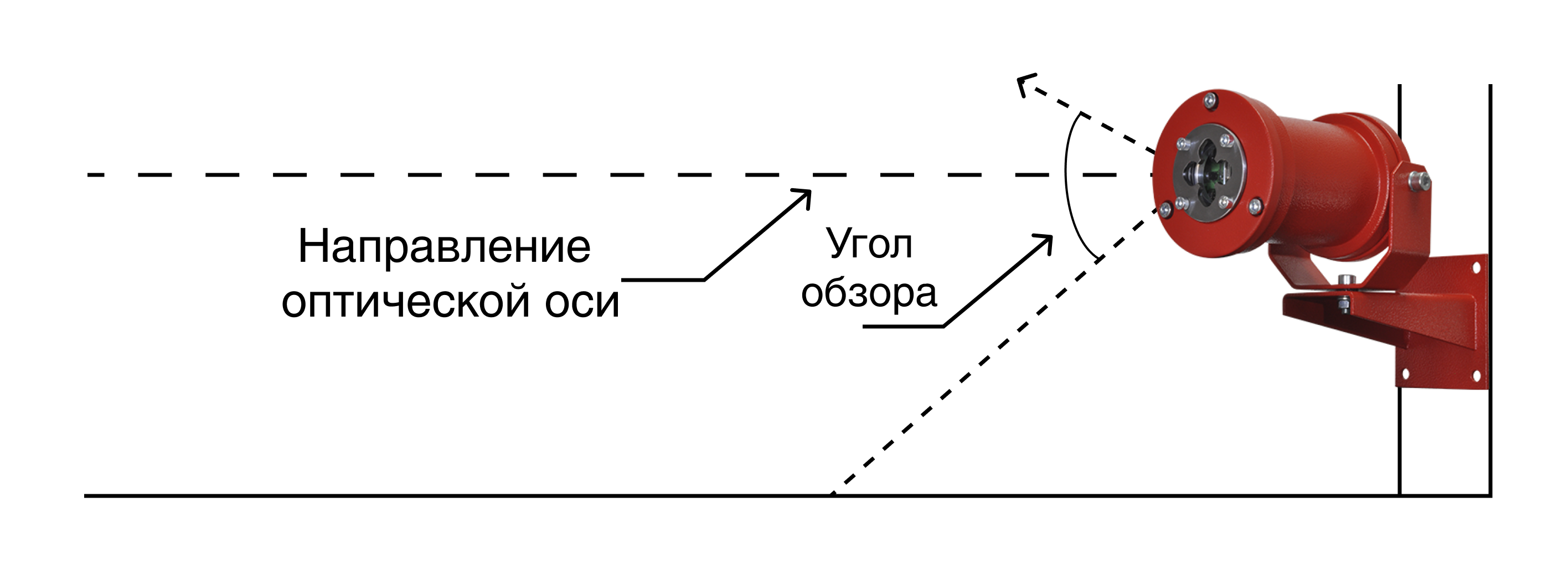
Flame detectors can be:
- Ultraviolet, infrared, or combined. The latter are more expensive but minimize the risk of false alarms.
- Standard or explosion-proof. The latter are used in hazardous industries.
Gas fire detectors detect high concentrations of methane, propane, CO2, and similar substances. The devices contain two sensors: catalytic (oxidizes gases) and inhibiting (slows down oxidation). They operate on the Wheatstone bridge principle. When gas concentration is high, the resistance of the catalytic sensor changes, triggering the detector.
Gas fire detectors are installed:
-
At facilities involving gases. Detecting high concentrations in time can prevent explosions.
-
In apartments and private homes. For example, carbon monoxide detectors (CO2) like the IP-02-DU from BONTEL.
In some cases, it is impossible to protect a facility with point-type or conventional linear detectors. For example, when the area is too large, the specific industrial environment causes false alarms, or installation and maintenance are impractical. In these cases, more complex and expensive systems are used:
-
Aspirating smoke detectors. They continuously sample air from protected areas and analyze it. They trigger when thresholds of CO2 or other fire indicators are exceeded. Pipes connected to the main unit run throughout the facility to draw air.
-
Linear heat detectors (fiber optic). For example, LEVEL BONTEL. These consist of a device connected to a fiber optic cable that is laid throughout the facility. Cable length can reach up to 40 km. These detectors are used to detect fires in mines, hazardous production areas, shafts, collectors, or tunnels. Installing conventional detectors in such places is too expensive or impossible.
Simplified working principle of a linear heat fire detector:
-
The main unit continuously sends light pulses through the cable, which are reflected from the fiber end.
-
The unit measures the return time and amplitude of the light wave. When temperature rises, these parameters deviate from standard values.
-
The device triggers and precisely identifies the alarm location.
Summary table of all fire detector types:
| Detector Type | Purpose and Operating Principle | Features | Suitable For |
|---|---|---|---|
| Manual | Activates alarm manually (via button). | Available for indoor and outdoor use. | Any object. |
| Point-Type Smoke | Detects smoldering fires and covers small areas (up to 6.4 meters). | Low cost, limited coverage, cannot be installed on ceilings >12m. | Apartments, homes, public and infrastructure buildings. |
| Linear Smoke | Detects smoldering fires with a beam range of 50–150 meters. | Expensive, requires installation in high-ceiling spaces (>21m). | Large warehouses, industrial facilities, large spaces. |
| Aspirating Smoke | Detects smoldering fires in large areas (up to 2000 m²). | Expensive, requires air intake pipes. | Large spaces with high ceilings (>21m). |
| Point-Type Heat | Detects fires with high heat generation. | Low cost, limited range (up to 3.5m), not suitable for high ceilings (>9m). | Industrial facilities, warehouses with non-smoking materials. |
| Point-Type Flame | Detects fires and explosions with open flames. | 5-10 times more expensive than other point detectors. | Explosion and fire-risk industries, flammable liquid warehouses. |
| Point-Type Gas | Detects high gas concentrations (methane, propane, CO₂, etc.). | Requires other detectors for fire detection (smoke, heat, flame). | Gasified homes, gas processing industries. |
| Linear Heat (Fiber-Optic) | Detects fires based on temperature changes over long distances. | Expensive, requires fiber optic cable installation across large areas. | Mines, tunnels, hazardous industries, long facilities. |
Purpose of Smoke, Heat, and Manual Fire Detectors
The purpose of smoke and other point-type fire detectors is to protect buildings from fires. They enable early detection and activation of:
-
Evacuation and public address system (SOUE). An alarm is activated (e.g., siren), allowing people to evacuate quickly.
-
Automatic fire suppression system (AFSS). Mandatory for buildings listed in SP 486.1311500.2020, such as two-story covered parking lots, hotels and dormitories over 30 m tall, and others.
This applies to detectors integrated into fire alarm systems. In homes and apartments, standalone models powered by batteries can be installed. They have dual functionality:
-
Detect fire signs
-
Trigger a built-in alarm
The purpose of a standalone fire detector is to trigger in the early stage of fire and allow residents to extinguish it or evacuate in time. In some cases, the alarm wakes up sleeping individuals, preventing suffocation or death from carbon monoxide. This is supported by various reports from different regions in Russia:
-
Bashkortostan, Buzat village, 2025. An 81-year-old woman turned on two electric heaters, overloading the wiring, which ignited. Neighbors heard the alarm, helped extinguish the fire, and called rescuers.
-
Republic of Crimea, Kerch, 2025. A mother left her sleeping son home alone. The wiring caught fire, the detector triggered, waking the teenager. He called for help, and neighbors summoned emergency services. Timely response prevented fire spread beyond one room.
-
Kerzhenets village, Nizhny Novgorod region, 2024. At night, the TV wiring in a large familys home caught fire. The father was awakened by the alarm, discovered the fire, and evacuated his wife and children. The fire quickly destroyed the entire house.
How to Choose the Right Type of Fire Detector for Your Facility
The choice of fire detector depends on the facilitys parameters. Determine the area and ceiling height. For example, the coverage radius of point detectors depends on ceiling height: the higher the ceiling, the smaller the coverage. If the ceiling is 9–12 meters high, smoke and heat point detectors are not allowed. This is prohibited by SP 482. Alternatives must be considered: linear, aspirating, or fiber optic detectors.
When selecting a fire alarm detector, also consider:
- The most likely fire indicators. For most public buildings, smoke detectors are suitable. For industries and warehouses, choose based on materials and processes involved.
- Type of SOUE and fire alarm system logic. This affects the choice between addressable and non-addressable models.
For apartments, garages, or private homes, a standalone smoke detector is sufficient. Choosing detectors for public and commercial facilities is more complex. One must consider SP 484, Federal Law 123, and other regulations, and perform calculations. These and other fire alarm design services can be ordered from BONTEL Group, by calling +7 (499) 322-21-12.