


Storage of Carbon Dioxide Fire Extinguishers
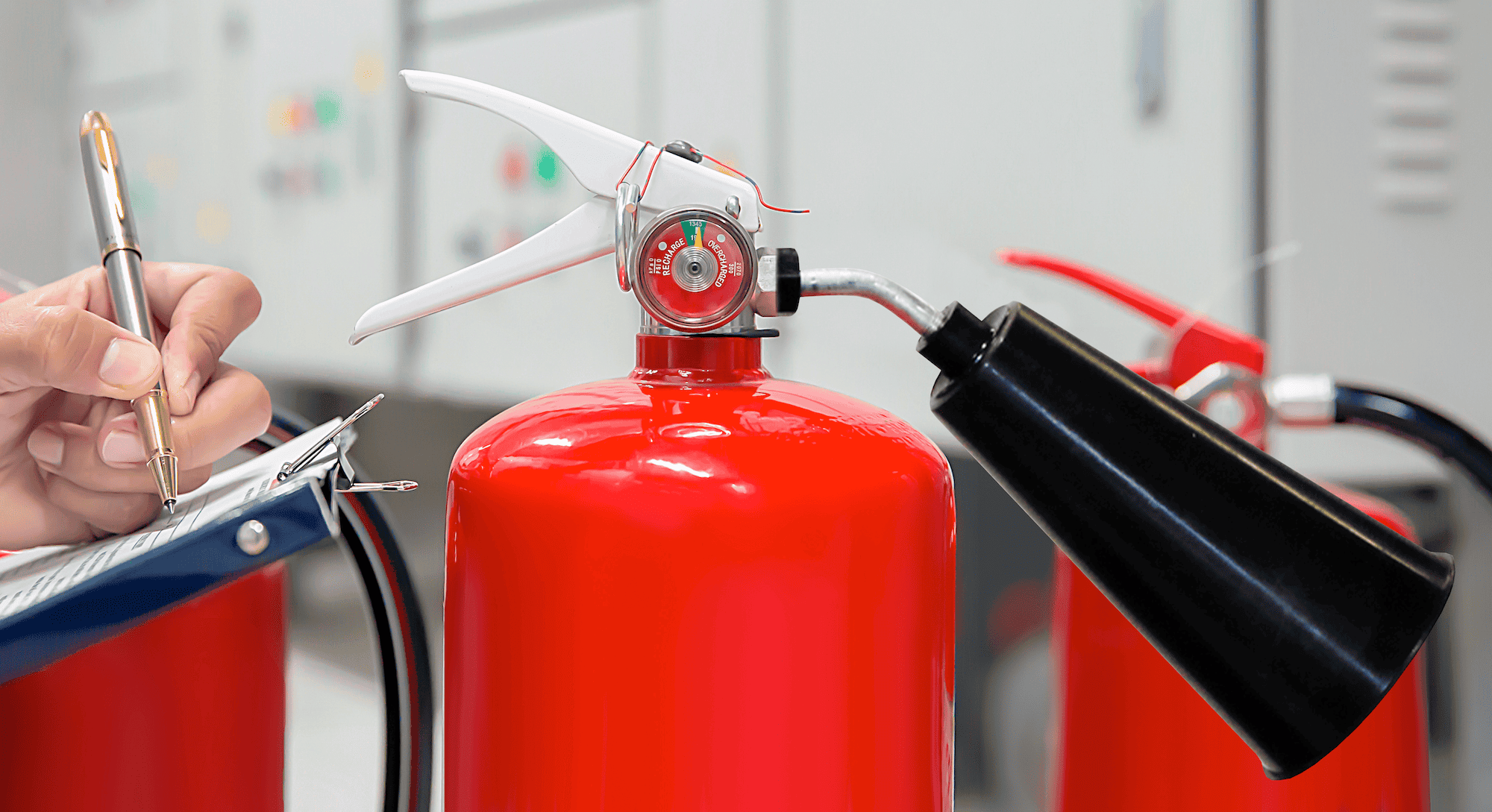
A carbon dioxide fire extinguisher (CO₂ extinguisher) is one of the most popular primary fire suppression tools. Releasing a gas jet at a temperature of approximately -75°C, it quickly extinguishes flames, cools surfaces, and displaces the oxygen needed for combustion. CO₂ extinguishers are effective against fire classes B, C, and E. However, improper storage can reduce their effectiveness and even result in failure to activate. This can lead to serious consequences, for example:
- December 5, 2009 – Perm, Russia. The most infamous case: the fire at the Lame Horse nightclub, which resulted in 156 deaths. According to witnesses, only one extinguisher worked.
- February 21, 2021 – Moscow. A nighttime fire broke out at the Bed & Beer hostel on Myasnitskaya Street. Not a single extinguisher worked. Forty people were evacuated, and fortunately, none were injured. The fire was extinguished by 20 firefighting units.
- November 21, 2018 – Chelyabinsk. A Duster car caught fire during the morning rush hour. The owner and nearby drivers had non-functional extinguishers. The vehicle was completely destroyed.
- September 17, 2013 – Fire (smoke) aboard the Tomsk nuclear submarine. A fire started during gas welding inside the submarine. The extinguisher failed to work. Fifteen servicemen were injured, and the nuclear reactor was shut down.
Such incidents highlight the importance of proper storage and regular maintenance of carbon dioxide extinguishers.
Storage Temperature of CO₂ Fire Extinguishers
Unlike water or foam extinguishers, CO₂ extinguishers can be stored in freezing temperatures. They withstand conditions down to -40 to -50°C (depending on the model). The manufacturer specifies the exact storage and operating temperature range on the label and in the user manual. The maximum storage temperature typically does not exceed +50 to +60°C.
Consequences of incorrect temperature storage:
- In extreme cold: CO₂ turns into a liquid at -76°C. If the temperature drops below -50°C, such as in the northern regions of Russia, storing the extinguisher under such conditions is not recommended due to the risk of pressure loss.
- In heat: The cylinder overheats. There are two main risks — a complete discharge through the safety valve or even an explosion. Therefore, CO₂ extinguishers should be kept away from direct sunlight.
Storage Conditions
Storage conditions can be divided into two categories:
- Manufacturer’s specifications: These include temperature (approx. -50 to +50°C), humidity (up to 95%), protection from sunlight, vertical storage position, and other instructions.
- Regulatory requirements: Set by the Russian Fire Safety Code SP 9.13130.2009.
Basic requirements for the storage conditions of CO₂ and other fire extinguishers according to SP:
- Height: For handheld extinguishers (up to 15 kg), the top must be no more than 1.5 meters from the floor to ensure accessibility for people of different heights. They can be wall-mounted or placed on the floor.
- Stability: If placed on the floor, the extinguisher must be stable. It should be stored in special boxes or stands.
- Accessibility: Extinguishers must be spaced properly. In low-risk areas (category D) — 70 meters; in higher-risk areas (categories A, B, and B1–B4) — 40 meters.
- Visibility: They must be placed in visible locations marked with signage and directional arrows.
The storage location should be protected from vibration, especially in industrial settings. Vibration may cause the extinguisher to fall, be damaged, or activate the safety valve, leading to charge loss.
The storage location should be protected from vibration, especially in industrial settings. Vibration may cause the extinguisher to fall, be damaged, or activate the safety valve, leading to charge loss.
- Indoors: Along walls, on brackets, in fire safety cabinets, or on the floor in boxes or corner stands. Avoid placing them near windows.
- Outdoors: Protect from rain, snow, and sunlight. Use weather-resistant boxes or insulated bags to prevent overheating.
Shelf life of a carbon dioxide fire extinguisher
Maximum shelf life without recharging is five years. For extinguishers stored in vehicles, the period is two years. After that, they must be serviced by certified companies licensed by the Ministry of Emergency Situations. The shelf life is the same whether indoors or outdoors.
The shelf life of a CO₂ extinguisher may be shorter. It must be weighed annually to determine any possible loss of mass. The loss should not exceed:
- No more than 5% of the total weight (cylinder + charge) over the entire storage period.
- No more than 50 grams per year, regardless of total mass.
Most manufacturers indicate two weights, which should be added together before weighing:
- Mass of the extinguishing agent. It is indicated on the label. For example, a CO₂ extinguisher labeled OU-2 contains 2 kg of carbon dioxide, while an OU-5 contains 5 kg.
- Mass of the empty cylinder. It is usually made of steel and weighs more than the extinguishing agent. In budget models with 2–3 kg of CO₂, the cylinder itself typically weighs around 7–9 kg.
CO₂ extinguishers have a relatively short service life and may need recharging every 2–3 years. Another disadvantage is their inability to extinguish Class A fires (solid materials). For example, in a household setting, they are not effective against burning textiles or wood.
More modern models, such as air-emulsion extinguishers (AEE), do not have the disadvantages of CO₂ extinguishers. They are effective against four fire classes (A, B, C, E) and have similar storage temperature ranges to carbon dioxide units. AEE extinguishers from BONTEL Group have a service life of up to 20 years and require recharging only once every 10 years.