


Storage of Foam Fire Extinguishers
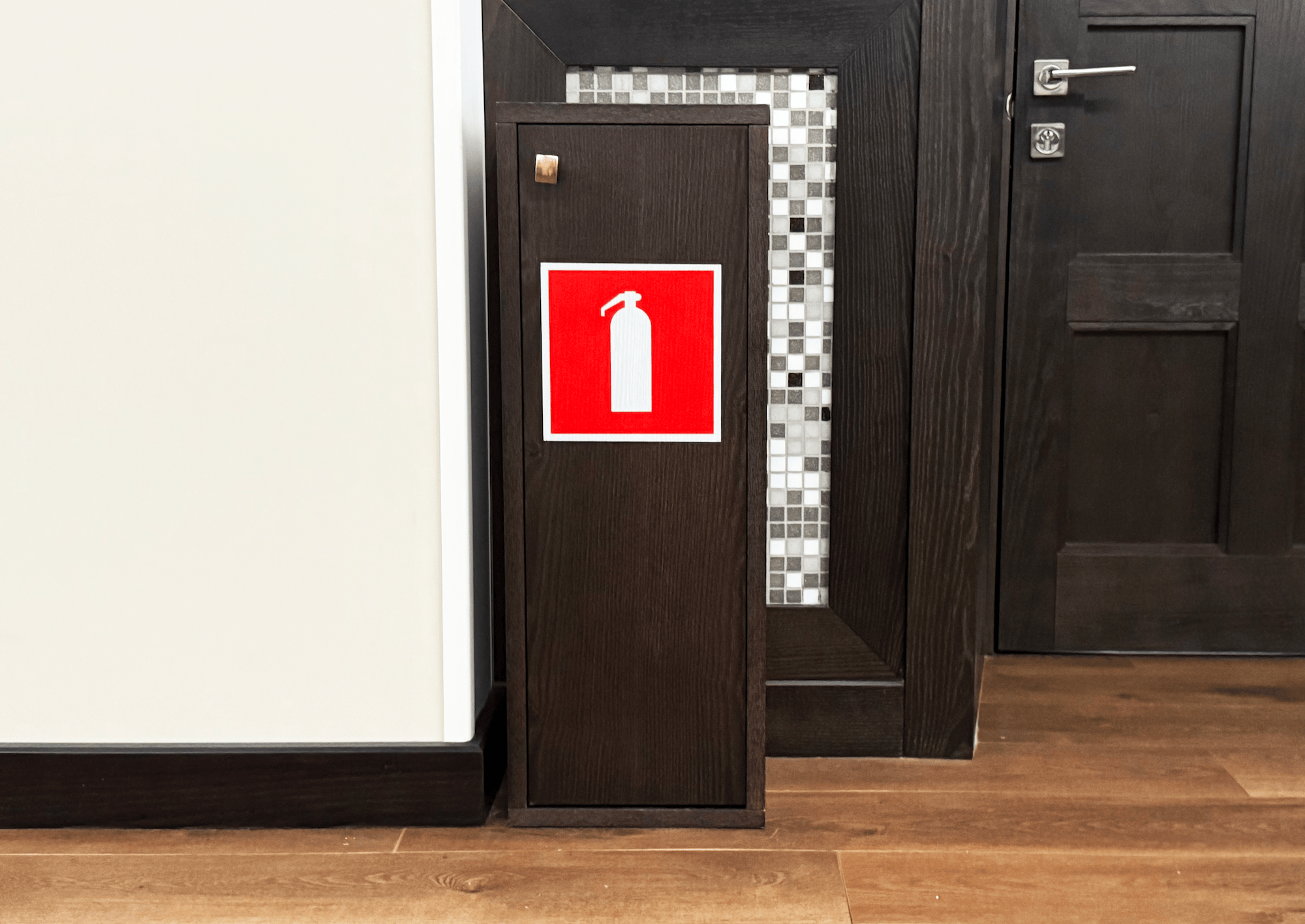
Foam fire extinguishers are an alternative to powder, carbon dioxide, and other models. They are suitable for extinguishing only two classes of fires: A (solid substances) and B (liquids). Foam conducts electricity, so it must not be used to extinguish live electrical equipment (E). It also does not affect or extinguish flammable gases (C). Foam fire extinguishers are most commonly used:
- In vehicles. Unlike powder, foam is easily removed from seat fabric and does not leave stains or residue. Carbon dioxide extinguishers are also unsuitable for cars as they cannot handle class A fires. For example, they are ineffective at extinguishing burning fabric, foam rubber, and other smoldering materials.
- In apartments and houses. Foam extinguishers are effective at putting out fabric, wood, plastic, and interior items. Foam residue is easy to clean. The foam covers burning materials, cools them, and blocks their access to oxygen.
- At gas stations and production facilities working with flammable liquids.
Foam fire extinguishers come in two types depending on the composition charged into the cylinder:
- Air-foam fire extinguishers.
- Chemical foam fire extinguishers.
Chemical foam fire extinguishers is an outdated type of extinguisher that was produced in the USSR until the late 1980s. Unaware of this, users often confuse them with air-foam fire extinguisher, searching for them on Google, Yandex, and other search engines. This partially preserves the "demand" for discontinued chemical foam fire extinguishers. The cylinder was charged with a mixture of sodium bicarbonate, sulfuric acid, and foaming agent. They were inexpensive but had several disadvantages:
- They caused corrosion (rust) on metal when the foam came into contact with it during fire extinguishing. Substances from chemical foam fire extinguishers should not come into contact with the face and skin. If this happened, they needed to be quickly washed off with water.
- They failed at temperatures below +2 and above +35-40 degrees Celsius. Storing chemical foam fire extinguishers was problematic in unheated workshops and hot industrial sites.
- The cylinder had to be turned upside down to release foam. It weighed over 15-20 kg. Only a physically strong person could use it. According to modern standards, turning the extinguisher upside down is not allowed.
- They had low efficiency.Chemical foam devices extinguished fires worse than all modern models designed for class A fires: Air-foam fire extinguishers, powder, air-emulsion.
On the internet, when searching "buy chemical foam fire extinguisher," all sellers offer the modern model — air-foam fire extinguishers. It does not cause corrosion and is safe for humans. Below, we describe the main rules for storing air-foam fire extinguishers to preserve their effectiveness for many years.
Permissible storage temperature of air-foam fire extinguishers
The storage temperature of an air-foam fire extinguisher is always indicated by the manufacturer on the label. There are two types of air-foam fire extinguishers:
- Summer. Designed for temperatures from 0-5 to +50 degrees. At lower values, the substance in the cylinder may freeze.
- Winter or frost-resistant. Designed for temperatures from -40 to -30 to +50 degrees.
Summer air-foam fire extinguishers are suitable only for constantly heated spaces — apartments, offices, and other buildings. They must not be used in car interiors left parked outside or stored in car trunks. Frost-resistant air-foam fire extinguishers are 20-30% more expensive than summer ones. They are universal, remain effective in winter, in unheated rooms, and can be transported in a car trunk.
Foam fire extinguishers should be stored away from direct sunlight. Sunlight significantly heats the metal cylinder. For example, if you store an air-foam fire extinguishers on a balcony in southern regions of Russia during summer, sunlight at the point of contact may heat the extinguisher to +60 degrees.
What happens to the extinguisher when stored under sunlight and at improper temperatures:
- Efficiency is reduced. The internal pressure (in MPa — MegaPascals) of most air-foam fire extinguishers is calculated at +20 degrees. At +55-70°C, gas pressure increases and may begin to leak through the valve. At temperatures below the specified norm, pressure drops.
- Functionality becomes questionable. During a fire, the air-foam fire extinguisher may fail. For example, the summer model may freeze — the extinguishing substance contains a water-based solution.
Special means can protect air-foam fire extinguishers from overheating due to sunlight and high storage temperatures:
- Covers. Work like a thermos. Some manufacturers indicate operating temperatures from -45 to +70 degrees.
- Fire cabinets. Wall-mounted boxes with solid doors or tinted glass.
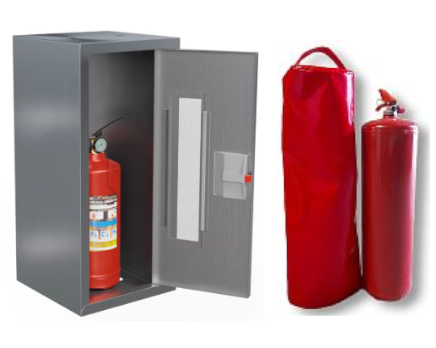
Источник: nfcom.ru, tushim.ru/
If the air-foam fire extinguisher was stored incorrectly, its functionality can be checked by inspecting and weighing the cylinder:
- Check the pressure on the built-in pressure gauge. It should be in the green zone. If the needle is in or near the red sector — the extinguisher needs to be recharged.
- Place the extinguisher on scales. The air-foam fire extinguisher label always indicates the gross weight — cylinder + extinguishing agent. Allowable weight loss is no more than 5% per year.
Operating temperature of air-foam fire extinguishers
The allowable operating temperature of a summer air-foam fire extinguisher is up to +5 degrees. If it is lower, the cooled extinguisher may release a jet with less pressure or may not function. Frost-resistant models may be used at subzero storage temperatures.
The storage and operating (usage) temperature is indicated by the manufacturer on the label.
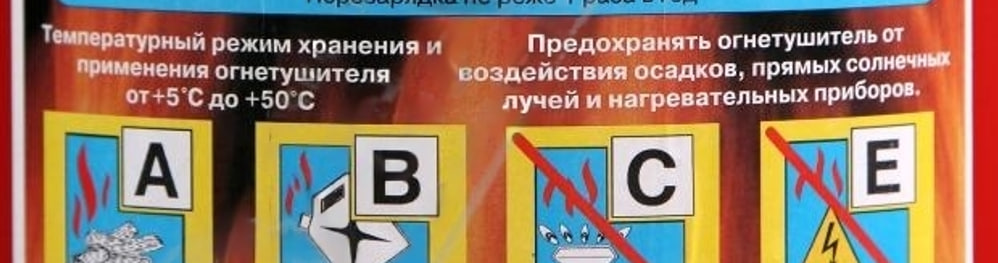
Source: rusarsenal.ru
Air-foam fire extinguisher is not a universal fire extinguisher. At a relatively high price, it works only with two fire classes and cannot extinguish live electrical equipment. However, statistics show that about 30% of fires are related to electrical appliances and old wiring in apartments. Modern air-emulsion fire extinguishers can extinguish such fires. They can be used at subzero temperatures from -20 to +50 degrees.
Air-emulsion fire extinguishers has several advantages over air-foam fire extinguisher:
- Subzero storage temperature. Summer air-foam fire extinguishers cannot be stored or used in frost or cold rooms.
- High efficiency. Models from the BONTEL Group can work with live electrical equipment up to 25,000 Volts.
- Extended service life. Air-foam fire extinguisher usually lasts 10 years with a recharge every 5 years, while cheaper models last 1 year. Air-emulsion fire extinguisher— 20 and 10 years respectively.