


Fire Extinguishers for Different Fire Classes
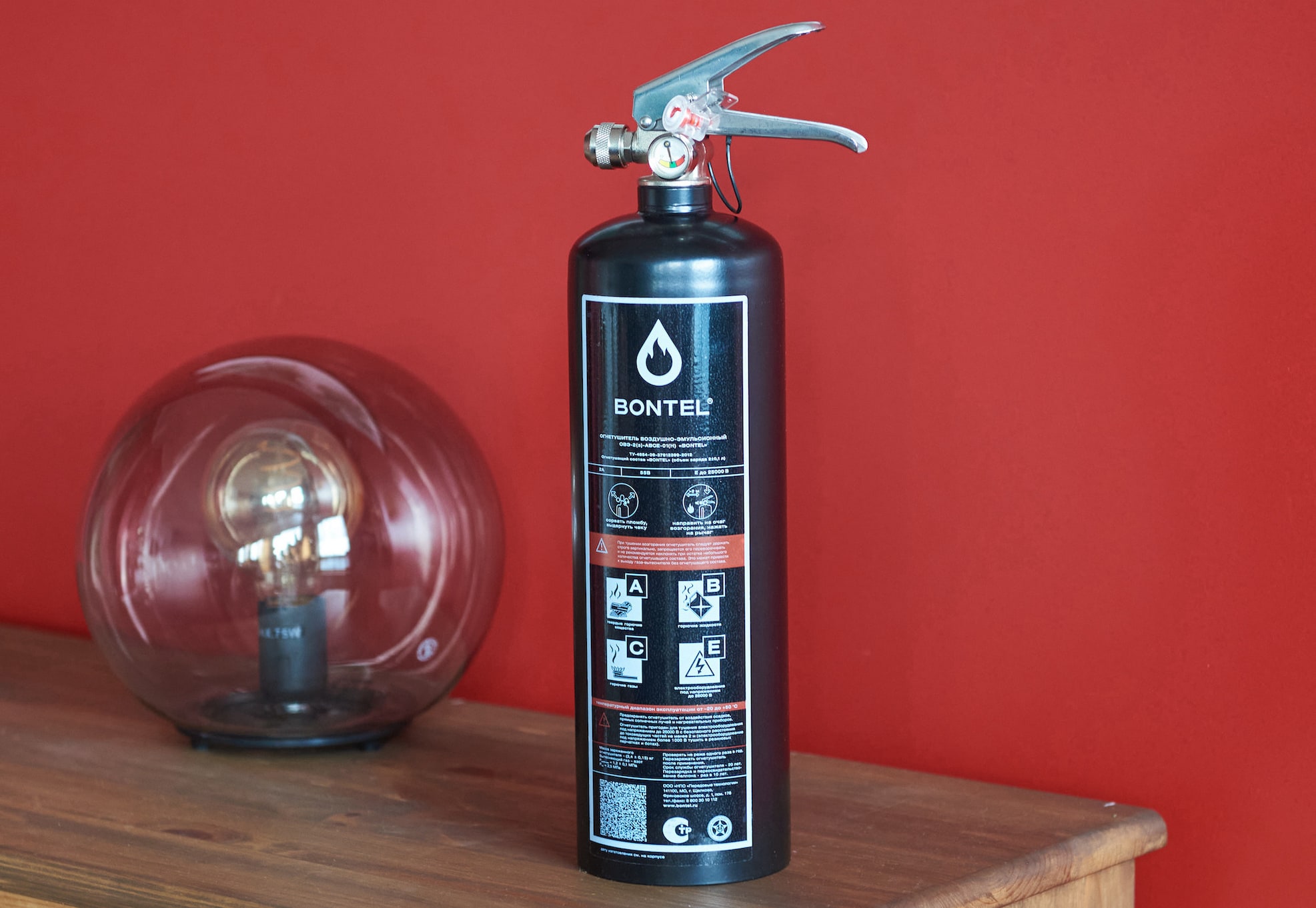
Fire classes (FC) are assigned based on the materials that caught fire and caused the ignition. For example, burning furniture, wooden structures, or textiles are classified as “A,” while kerosene, diesel fuel, and oils are classified as “B.” Depending on the fire class, each fire must be extinguished in a specific way — using water, dry powders, carbon dioxide, or other agents.
There are six fire classes in total:
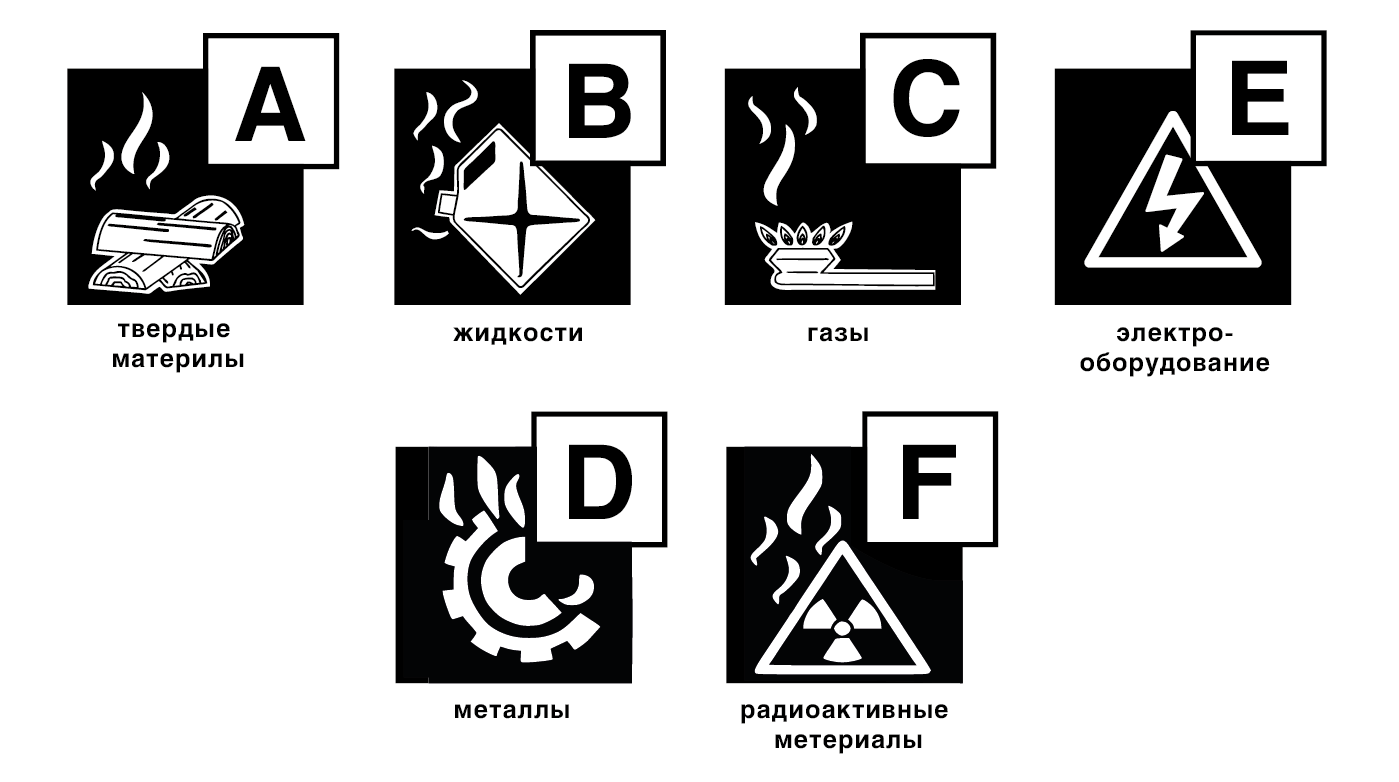
Classes A, B, C, and E are the most common in households and industry. Depending on the materials involved and the presence of electrical current, these fires can be extinguished with water, sand, dry powder, or carbon dioxide extinguishers. Class D and F fires are the most complex, typically occurring in specialized industries or nuclear facilities, and require professional extinguishing agents.
What Fire Classes Can Be Extinguished with a Dry Powder Extinguisher?
Dry powder models (marked "OP") are among the most common types of fire extinguishers. They are often purchased to protect public buildings and industries and for use in vehicles. This is because standard dry powder extinguishers can extinguish fires of classes A to E. They have a number of advantages:
- Remain operational at air temperatures from -40-50°C to +50-60°C. They do not freeze or lose extinguishing capacity.
- Low cost. The simplest small-volume dry powder models can be purchased for 1500–2000 rubles.
- Low toxicity. Modern powders in extinguishers are salts, safe for humans. They may cause coughing when inhaled, a slight choking effect. Powder cannot really harm health — this is a common myth.
Fire extinguishers are filled with various types of powders. Their ability to extinguish a specific type of fire depends on this. Most commonly used are:
- Sodium and potassium bicarbonate salts. Most effective against all FCs and relatively inexpensive.
- Ammonium phosphates (ammonophos). Unlike bicarbonates, they perform better with FC "A", e.g., extinguishing smoldering wood.
- Alkali metal chlorides. A rare type of powder extinguisher. Designed for FC "B".
All powder models operate in the same way: they cool the burning zone, mechanically knock down the flame with their jet, and create a cloud of salts. The substance covers the burning material and blocks oxygen access to the fire. The only disadvantage of a powder extinguisher: it damages valuables and electronics. A powder film forms on their surfaces, making it impossible to restore the appearance of furniture or the functionality of computers and servers. For these reasons, powder extinguish
What fire classes can be extinguished with a dry powder fire extinguisher:
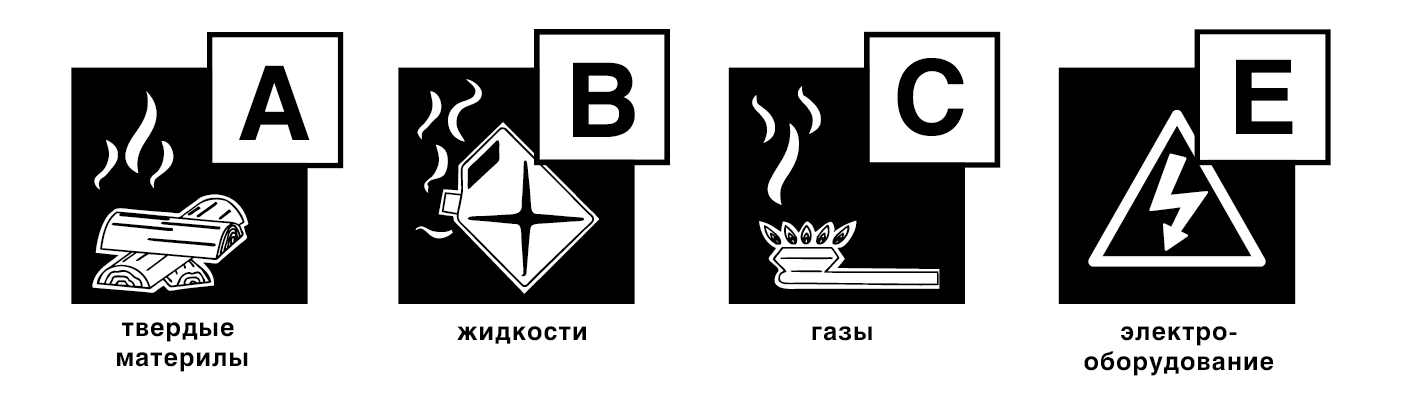
Fire classes “ABCE” can be extinguished with regular dry powder fire extinguishers, which are relatively inexpensive. Special models, which are more expensive, are designed for fires involving metals capable of burning without access to oxygen (D) and radioactive materials (F). These fire extinguishers:
- Have a yellow body. This allows quick distinction between a “household” model and a special one.
- Are filled with specialized powders. They are divided according to the fire subclasses the extinguisher works with. For example, PHC powder is effective against fires involving aluminum, magnesium, and their alloys (D1), and allows extinguishing radioactive materials. Vekson-D2 works with potassium, sodium, and other alkali metals.
What fire classes cannot be extinguished with a dry powder extinguisher:
- Class A, if the protected materials are of high value. The powder will definitely contaminate the surfaces during extinguishing, and it will be difficult to wash off.
- Class E, if the voltage on the electrical equipment exceeds 1000 Volts.
What fire class can be extinguished with a water fire extinguisher
Water is the most common fire extinguishing substance. Water-based fire extinguishers, marked in russian “OB,” are less popular; most people choose powder, carbon dioxide, and other models. The flame is extinguished by a fine mist of water sprayed under pressure. It reduces the temperature of burning surfaces and prevents the fire from reigniting, making materials resistant to ignition and smoldering. The water-based fire xtinguisher contains a water solution with chemicals (less than 5%).
Main disadvantages of water-based models:
- Limited by fire classes. Unlike powder models, they are not suitable for all FCs.
- Cannot be installed in cold rooms. The water extinguisher may freeze at sub-zero temperatures.
What fire class is effectively extinguished with water extinguishers:
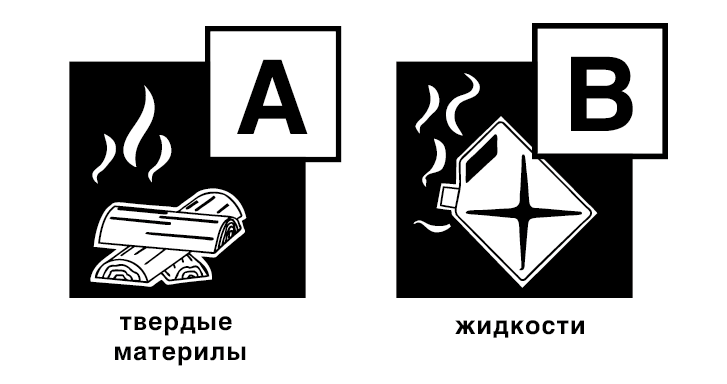
The fire class that can be extinguished with a water-based extinguisher corresponds to the fire classes that are extinguished with water: only solid materials and flammable liquids. Water-based extinguishers cannot handle gas fires and must not be used on energized electrical equipment: there is a high probability of electric shock.
What fire class cannot be extinguished with a water-based extinguisher:
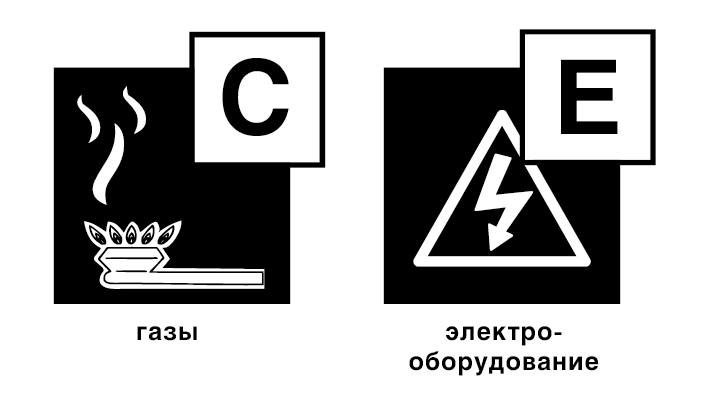
Class B fires are extinguished worse than with powder or carbon dioxide. In reality, WB extinguishers are best suited for solid material fires: textiles, wood, paper, cardboard. They are purchased for weaving factories and other industries, considering the advantages of water models:
- A powerful water jet reliably cools surfaces. Unlike powder, it soaks into wood, textiles, and other materials. The flame cannot reignite.
- Water is completely safe. Powder creates a cloud that can cause coughing and choking, carbon dioxide displaces oxygen in the room. Water can be used in any quantity and does not have these disadvantages.
For the home, we recommend purchasing a water fire extinguisher only in combination with a powder, carbon dioxide, or other type. This will allow you to quickly respond to any fire:
- If furniture, curtains, or other fabric catch fire — use water-based extinguisher.
- For fires of other classes, such as electrical wiring or appliances — extinguish with powder or carbon dioxide.
What fire class can be extinguished with a carbon dioxide fire extinguisher
The carbon dioxide fire extinguisher (marked “CO2”) is the second most popular model after powder. It is charged with carbon dioxide (CO₂), which is released under high pressure onto the flame and surfaces. The jet temperature reaches -70°C. This allows the flame to be mechanically knocked down and the burning materials to be rapidly cooled.
What fire class can be extinguished with a carbon dioxide extinguisher:
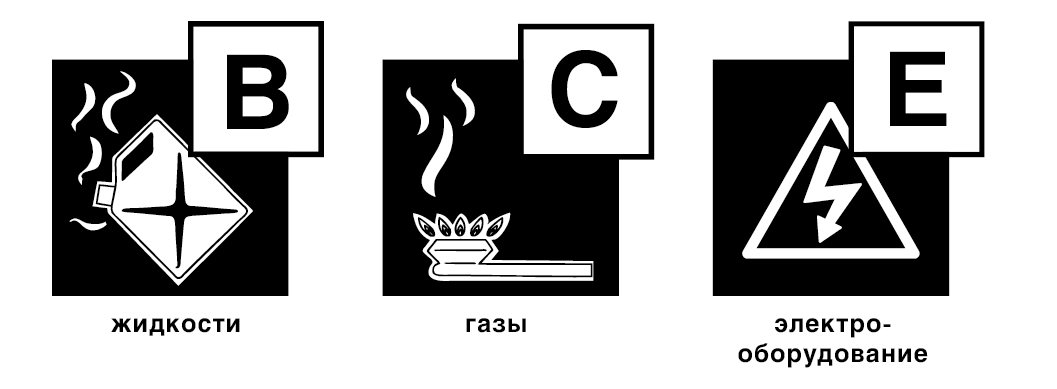
Carbon dioxide allows extinguishing flammable gases, liquids, and electrical equipment with a voltage of up to 10,000 Volts — 10 times more than powder extinguishers. Depending on the type of diffuser, it releases two types of jets:
- Gas jet. Optimally suited for fires of classes B, C, E. The gas is released and settles on surfaces in the form of dry ice.
- Snow jet. The gas is released in the form of snowflakes. This allows extinguishing class A fires.
A class A fire can be extinguished with a carbon dioxide extinguisher. In some cases, it may be necessary to additionally pour water over the burning materials. For example, textiles, wood, cotton wool, and other materials can smolder from the inside; carbon dioxide is not capable of stopping this process, as it only affects the surface.
The main advantages of carbon dioxide models:
- Safe composition that does not damage valuables. Unlike powder and water, CO₂ turns into dry ice. This allows extinguishing expensive items and electronics.
- Temperature resistance. Like powders, CO₂ does not freeze at sub-zero temperatures. It can be used down to -40 to -50°C.
- High efficiency. They release a cold jet that cools any surface extremely quickly. Water and powder are less effective.
Most often, CO2 extinguishers are used at gas stations, in paint and similar workshops working with liquids, in museums and server rooms where it is important not to damage valuables and electronics. In an apartment, it is recommended to supplement the carbon dioxide model with water-based or powder extinguishers.
Rowder, water-based and CO2 —are the three most common types of fire extinguishers. Each of them has its drawbacks. These are eliminated in more modern models based on air emulsion (AE), which have a number of advantages:
- Versatility. Like powder models, they work with fire classes A, B, C, and E. They allow extinguishing electrical equipment with a voltage of up to 25,000 Volts. For comparison: DP is limited to 1000 Volts, CO2 — 10,000 Volts.
- Reliability. Powder and carbon dioxide models need to be weighed regularly (once a year), certified, and recharged every 5 years. AEs service life without recharging is 10 years.
- Safety. Unlike water and powder models, the air-emulsion composition does not damage valuables. It does not emit substances into the air that cause coughing and choking or displace oxygen, like carbon dioxide does.
You can buy modern air-emulsion fire extinguishers in our online store.Learn more about our products by calling +7 (499) 322-21-12.