


Features of Firefighting in Buildings
According to statistics, approximately 400 fires occur daily in Russia. Most of these affect residential, public, and administrative buildings where many people are regularly present. This can lead to severe consequences beyond material losses — including injury and loss of life. Proper firefighting techniques, taking into account the specifics of high-rise buildings and the need for evacuation, can help prevent such outcomes.
Firefighting in Residential Public Buildingsя
Residential public buildings include all multi-apartment complexes. They are inhabited by ordinary residents, most of whom have no fire safety training, have not completed the "fire-technical minimum," and lack specialized knowledge. Statistics show that about 33% of all fires occur in such buildings, accounting for around 90% of all fire-related deaths.
Fires in residential public buildings may be extinguished by:
-
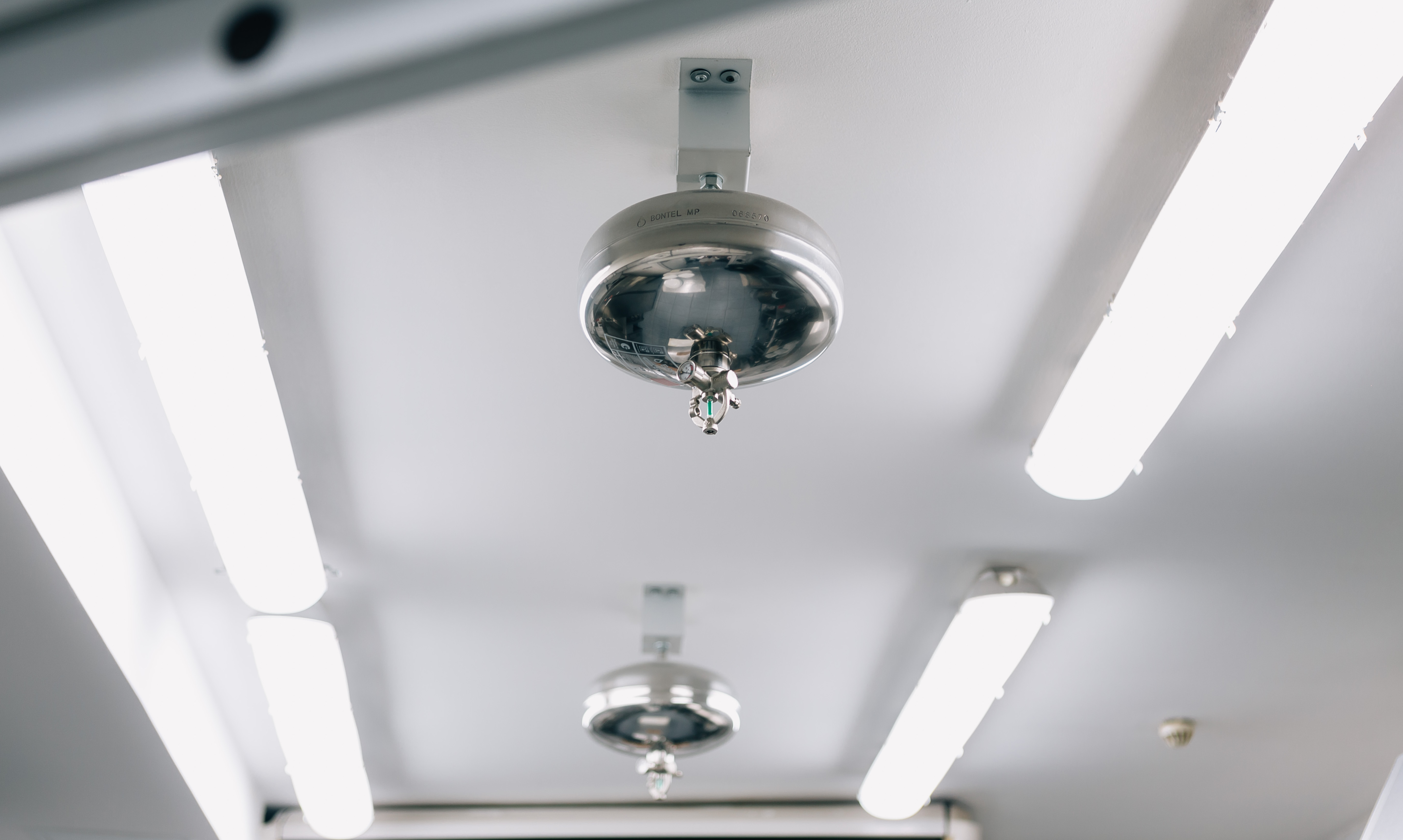
Automatic systems. Fire suppression systems are rarely installed on floors and in basements of residential buildings. Usually, only fire alarms and smoke detectors are in place to notify of fires.
- Residents who discover the fire. In the early stages, before emergency services arrive, volunteers can attempt to extinguish the fire after calling 101. If they fail to contain the flames, evacuation is necessary.
- Emergency services (EMERCOM). Upon arrival, the 101 response team begins professional firefighting and evacuates any remaining people in the building.
Residents can attempt to extinguish a fire in a public residential building using:
-
Any available means, such as water or fire extinguishers.
- A fire hose system located in a fire cabinet on the floor. Required in buildings 12 stories or taller. Any resident can open the cabinet, unroll the hose, connect it to the internal fire water supply, and fight the flames similarly to a fire hose line.
Key points of self-extinguishing fires in residential buildings:
- Do not overestimate your abilities. Fires can only be extinguished personally in the early stages. If the apartment is heavily smoked or the flames are spreading rapidly, only professional firefighters can handle the situation.
- Save lives over property. If the building lacks a fire alarm, warn others by shouting “Fire!” and similar alerts. When leaving a burning or smoke-filled area, close the doors behind you — if theyre metal, they can serve as a natural fire barrier.
- Do not use water on live electrical equipment. Unless the apartment or section has been de-energized, use only dry powder, carbon dioxide, or specialized fire extinguishers (type OVE).
Upon arrival, EMERCOM personnel conduct reconnaissance to assess the fires severity, determine its class, locate the nearest water sources, estimate the number of people in the building, and define specific actions. If the fire covers a small area (e.g., one or two rooms), reconnaissance may be performed "on the move."
Features of Firefighting on Building Floors
- The fire spreads quickly. EMERCOM teams must determine the fires source, its approximate size, and potential spread — for instance, in high-rise buildings, flames often move to upper floors through flammable plastic windows.
- Complete evacuation is necessary. If stairway evacuation is impossible due to smoke, people may be rescued from balconies and loggias using ladders, inflatable slides, "life cubes," or rescue nets for safe jumps.
- Firefighting nozzles with finely dispersed water sprays are used, often combined with solid streams. These help cool surfaces and air, reducing smoke levels.
Once people are evacuated, the priority is fire containment. Flames must be kept within a specific area and gradually extinguished.
Real incidents that illustrate residential firefighting features:
- July 26, 2024, Ulyanovsk. A gas cylinder exploded in an apartment. Before EMERCOM arrived, the fire spread to two neighboring apartments. One adult and one child died. Others were evacuated. Firefighters extinguished the fire through shattered windows on the 3rd and 4th floors using ladders.
- February 9, 2024, Moscow. A six-story building caught fire, spreading from 300 to 4,000 m², with the roof collapsing. A firefighting helicopter dropped 50 tons of water. 400 people were evacuated successfully with no injuries.
- February 13, 2024, Anapa. A fire started in a penthouse on the 11th floor. Wooden flooring accelerated its spread. All residents were evacuated, the roof collapsed, and about 32 apartments were affected.
- July 24, 2024, Moscow. A fire in a 7th-floor apartment spread to the balcony above, then the attic and roof. 300 residents evacuated independently. Four people were rescued by EMERCOM from the 8th floor. A helicopter, 46 fire units, and 150 firefighters were involved.
These cases demonstrate:
- Fires require massive equipment and coordinated EMERCOM efforts.
- Flames rapidly travel upwards (via balconies) and sideways (through the roof).
- If not extinguished early, apartments and belongings are often entirely destroyed.
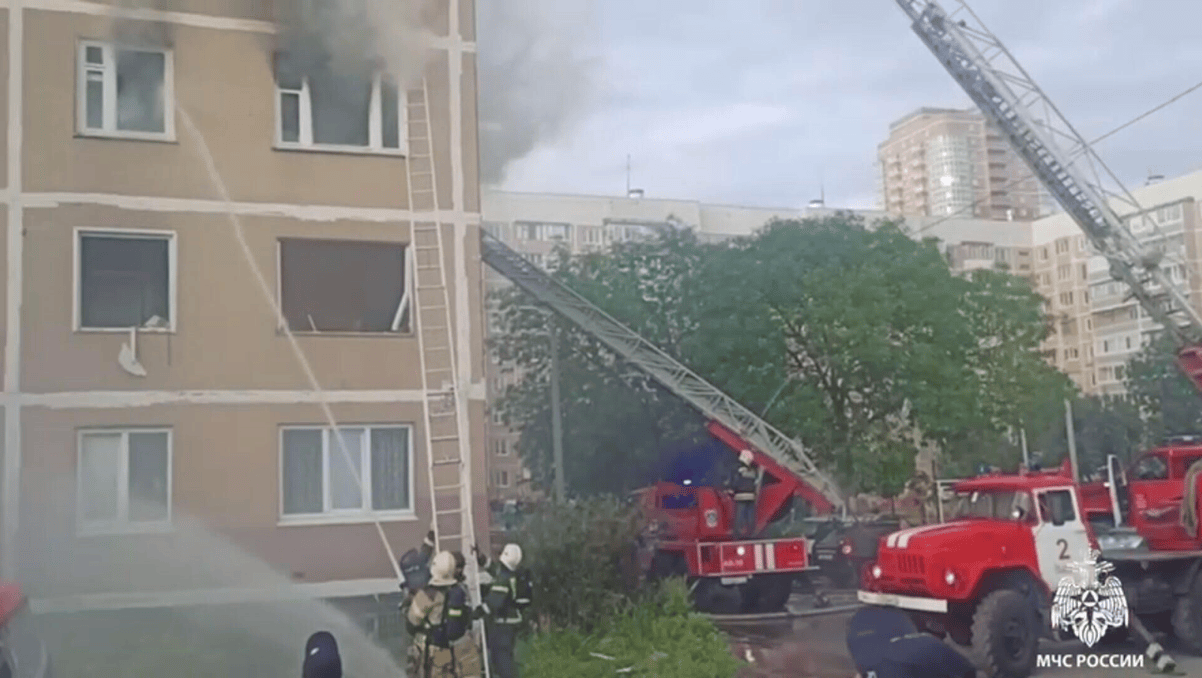
EMERCOM of Russia personnel working at a fire in Ulyanovsk (2024). Source: Official Telegram channel of the Russian Ministry of Emergency Situations
Firefighting in Administrative Buildings
Unlike residential buildings, administrative buildings house working employees. By law, they must be trained in fire safety and evacuation, undergo regular instruction, and study the fire-technical minimum. Designated fire safety officers are responsible for monitoring systems such as alarms, extinguishers, and clear evacuation routes. In practice, these rules are often violated, leading to fires.
EMERCOM begins firefighting in administrative buildings similarly to residential ones — by conducting reconnaissance, determining the need for evacuation, and selecting appropriate firefighting methods. If necessary, the fire is assigned a higher rank, enabling additional resources.
Examples of administrative fires:
- June 24, 2024, Moscow. A fire in a 9-story administrative building in Fryazino industrial zone engulfed 5,000 m². Eight people died, one jumped from the 8th floor. The fire was fought by 130 EMERCOM personnel, with 50 units of equipment and a helicopter. The building had not been inspected since 2017 and housed over 30 offices. Oxygen cylinders inside exacerbated the fire.
- February 28, 2024, Rostov-on-Don. A night fire in a children’s health center cafeteria (empty at the time) covered 1,000 m². 43 EMERCOM staff and 13 fire units extinguished it in 4 hours.
- March 12, 2021, Yekaterinburg. A daytime fire broke out on the 5th floor of a research institute. The fire alarm worked on time; around 200 people evacuated on their own. 50 firefighters and 15 units of equipment extinguished the blaze.
These examples reflect typical problems in administrative buildings — fires often result from safety violations, faulty alarms, or broken suppression systems. Unlike residential buildings, nighttime administrative fires rarely cause casualties.
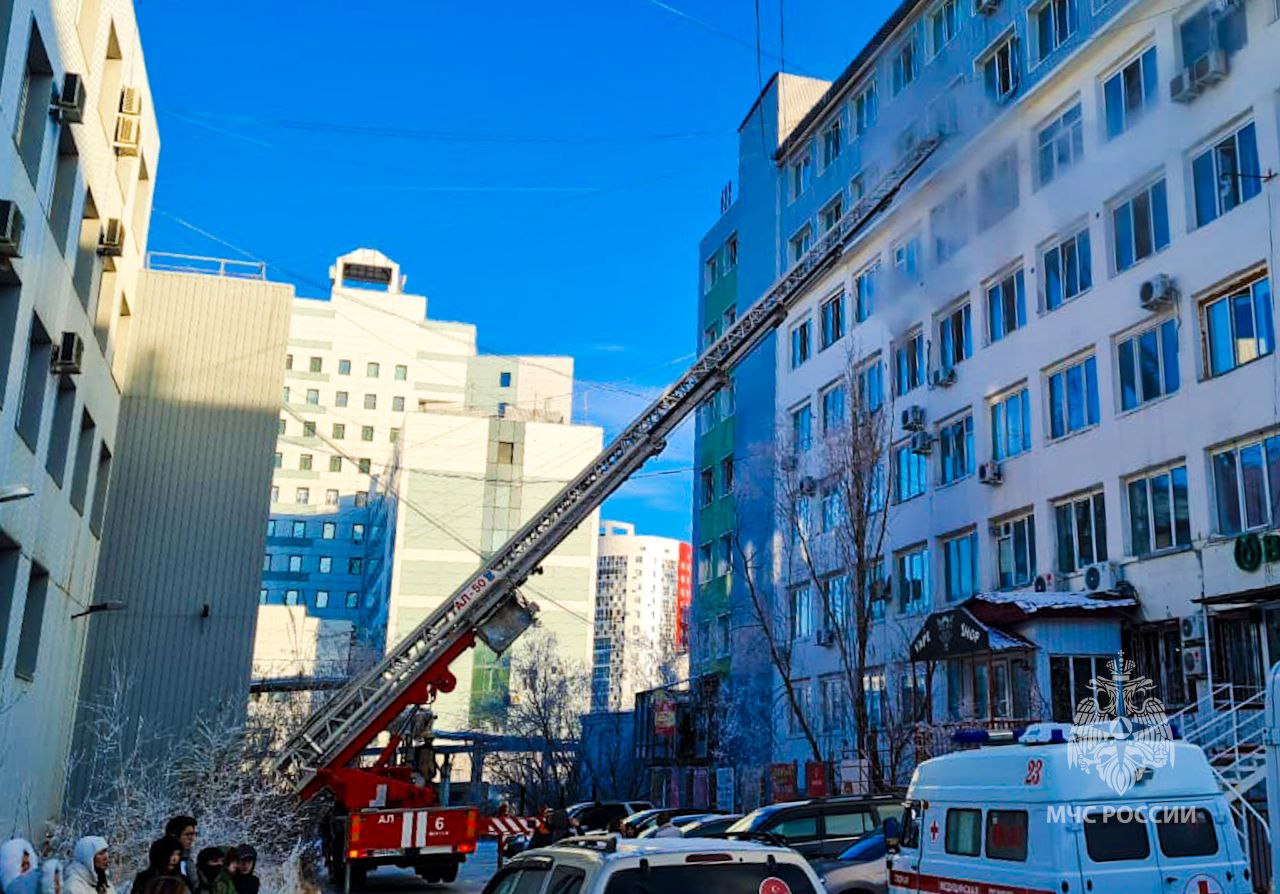
Сотрудники МЧС тушат пожар в административном здании в Якутске (2023 год). Источник: МЧС Республики Саха (Якутия)/Telegram
Firefighting in High-Rise Buildings
High-rise buildings are those 12 stories and above. They are required to have:
- Fire water supply systems. Each floor has a fire cabinet with a long hose and nozzle.
- Fire alarms. Seen in new buildings — ceiling smoke detectors and control panels in concierge areas.
Firefighting challenges in high-rise buildings:
- Rapid fire spread. Flames jump to upper floors through balconies and windows.
- Evacuation is difficult. People may not be able to descend from the 20th–25th floors quickly. Stairwells can become smoke-filled, forcing residents to seek refuge at windows or on the roof.
- Technical complications. Fire ladders often don’t reach above the 20th floor. Water pressure may be insufficient, and hose streams may not reach high enough.
- Improper parking. Cars block fire trucks’ access. EMERCOM is legally prohibited from ramming vehicles, so firefighters must find alternate routes.
- Violations. Fire cabinets may lack hoses or nozzles.
These complications explain why fires in buildings of 17–25 floors account for just 1% of all incidents but cause 2–3 times more deaths than in standard apartments. In such cases, EMERCOM’s top priority is rescuing residents trapped by flames. Real-life examples:
- May 7, 2024, Yekaterinburg. Fire on the 21st floor. A man tried to climb to a neighboring loggia but fell onto a shop roof. He later died in intensive care.
- July 21, 2023, Moscow. A man was trapped at a 7th-floor window. EMERCOM arrived in time and rescued him via aerial ladder.
- July 10, 2024, Kazan. A woman trapped on the 9th floor attempted to escape through a window. Firefighters were delayed due to blocked access. Concerned neighbors helped move cars, enabling rescue.
- June 25, 2023, Korolev. A fire on the 14th floor due to arson. Fire cabinets lacked hoses and nozzles. EMERCOM officer Rustam Nakibov tried to save a person; both were trapped on a balcony, fell, and died.
- July 6, 2024, Yekaterinburg. A daytime fire in a 16-story building. The alarm failed. Three apartments burned out. No injuries. Authorities noted that had the fire occurred at night, fatalities would have been likely.
These incidents highlight the need for self-protection:
- Buy a fire extinguisher. It can help you escape or create a safe path. For apartments over 25 m², two are recommended.
- Avoid buying apartments above the 5th–7th floor if you have health issues or young children.
- Don’t disable or cover smoke detectors.
- Report fire safety violations — such as missing hoses or faulty alarms — to the fire inspectorate. Do not tolerate inaction from building management.